27 September 2026
Drain Cleaning Projects and When a Licensed Plumber Is Required
Presented by @trevorcxml631
A clogged drain rarely stays a simple nuisance for long. It starts as a sink that empties a little slower than usual, or a shower pan that holds water around your feet for a few extra minutes. Then the problem begins to spread. Odors linger. Fixtures gurgle. Someone reaches for a bottle, a plunger, or a hand auger and hopes the problem is close to the surface.
That instinct is understandable. Some drain cleaning situations look small at first. What matters is knowing where ordinary maintenance ends and regulated plumbing work begins, especially in Hawaii, where the rules are clear and consumers have practical tools for protecting themselves.
For homeowners and property managers searching for a plumber near me, a plumber Honolulu, or a plumber Oahu, the real question is not just who can clear a line. It is who is legally allowed to do the work, whether a permit is involved, and whether the person entering the building is properly licensed for the job.
Why drain cleaning is not always a simple maintenance call
The phrase drain cleaning covers a wide range of situations. At one end, a fixture drains slowly and the problem may be confined to a localized blockage. At the other, the issue points to a larger drainage defect, a hidden leak, or a sewer line repair that reaches well beyond a routine service call.
That difference matters because plumbing work in Hawaii is regulated. The state’s Department of Commerce and Consumer Affairs, often the first place a careful customer should look, allows consumers to verify a plumber’s license status, expiration date, and disciplinary history through its official license search tools. That is not a formality. It is a practical step for anyone hiring help to work on drainage, piping, or related systems.
The City and County of Honolulu adds another important layer. Plumbing and drainage work authorized by permit is inspected for compliance, and Honolulu’s permitting guidance states that all electrical and plumbing work must be performed by contractors licensed by the State of Hawaii. In other words, once the work crosses into permitted plumbing, this is no longer a casual handyman task or a do-it-yourself experiment with higher stakes.
A professional approach to drain cleaning starts with a sober question: is this truly a minor stoppage, or is it part of a larger plumbing project that triggers licensing and permit requirements?
The point where Hawaii law changes the conversation
One of the most useful rules for consumers in Hawaii is straightforward. The DCCA advises hiring a licensed contractor for projects over $1,500 in labor and materials, or for any project that needs a building, electrical, or plumbing permit.
That means the size of the invoice matters, but cost is only half the picture. Even if the dollar amount is modest, permit-triggering plumbing work belongs in licensed hands. DCCA also states that electrical and plumbing contractors must employ licensed electricians and plumbers to perform the actual electrical or plumbing work. For plumbing customers, that is the key sentence. It tells you that the actual plumbing work is not something that can be delegated casually to unlicensed labor.
Drain cleaning jobs sometimes stay below that threshold and outside permit territory. Sometimes they do not. A stopped line can uncover pipe failure. A backup can expose a defect in a drain or waste line. A service call that began as an attempt to restore flow can quickly become a repair project, and once it does, the legal requirements become much more important than the original symptom.
This is where consumers often get tripped up. They hire someone for what sounds like a simple clearing job, then the visit expands into opening walls, replacing drainage components, or recommending sewer line repair. The moment the scope expands, so should the scrutiny.
What usually separates a minor clog from regulated plumbing work
The cleanest way to think about it is by scope, permanence, and code oversight.
If the issue is a basic stoppage and the work does not become a repair, the situation may remain a straightforward service problem. But if the work involves altering plumbing components, replacing parts of a drainage system, or doing anything that requires a plumbing permit, Hawaii’s licensing rules are no longer optional. In Honolulu, permitted plumbing and drainage work is subject to inspection for compliance. That changes the job from routine clearing to regulated construction activity.
A useful practical example is the call that begins with a backed-up fixture and ends with a recommendation for sewer line repair. Another is a drain complaint that turns out to be connected to a broader leak issue. Leak detection can become part of the same conversation because drainage symptoms do not always stay isolated. Slow drains, recurring backups, and unexplained moisture sometimes overlap in ways that make a licensed plumber essential, not just convenient.
The same judgment applies in commercial settings. A commercial plumber is often brought in not simply because the building is larger, but because the consequences of downtime, access issues, and https://andersondryq736.westhavenscope.com/posts/drain-cleaning-and-permit-questions-answered-for-honolulu-owners code compliance are more serious. Restaurants, offices, retail spaces, and multi-tenant properties cannot afford guesswork when a drain complaint expands into a larger plumbing issue.
When to stop treating it as a drain cleaning problem
Consumers do not need to diagnose code triggers on their own, but they do need to recognize when a service call has moved into licensed territory. These are the moments when it is wise to slow down and ask direct questions before authorizing more work.
- The project will exceed $1,500 in labor and materials.
- The contractor says a plumbing permit is required.
- The work goes beyond clearing a stoppage and into repair or replacement.
- The issue appears connected to a larger drainage or sewer problem.
- The property is commercial, multi-unit, or otherwise sensitive to compliance issues.
That short list does not cover every scenario, but it captures the turning points that matter most under the verified Hawaii rules.
Honolulu owners should pay special attention to permits
For property owners in Honolulu, permit awareness is not just administrative housekeeping. The local code framework specifically states that plumbing and drainage work authorized by permit is inspected for compliance. The city’s permitting guidance also notes that permit valuation includes plumbing, heating, air conditioning, and other permanent work when calculating fees.
That tells you something important about how local government views plumbing projects. Once work is part of the permanent building system and falls into permit territory, it is being treated as real building work with compliance obligations, not just a service convenience.
This becomes especially relevant when a drain problem leads to broader repairs. A person may call for drain cleaning and end up discussing line replacement, reconstruction, or related work affecting a permanent system. By that stage, the right question is not, “Can someone clear the blockage today?” It is, “Who is licensed to perform the actual plumbing work, and what permits or inspections apply?”

That distinction protects the owner as much as the building. If the work is supposed to be performed by licensed professionals and inspected when permitted, bypassing that structure can create avoidable risk.
Why license verification is more than a box to check
Consumers often assume that if a company advertises plumbing services, the licensing details must already be in order. That is a risky assumption. Hawaii gives the public a direct way to verify a plumber’s license status, expiration date, and disciplinary history through official DCCA tools. That level of transparency is useful precisely because drainage calls can evolve quickly.
A customer might search for an emergency plumber during a backup and make a hurried decision. Another might hire someone for what seems like routine water heater repair, only to discover related drainage or leak issues that require broader plumbing work. The pressure of the moment can push license verification to the bottom of the list. It should move to the top.
There is also a quality dimension to this. Hawaii currently requires licensed plumbers on active status to show proof of continuing competency in the 2021 Uniform Plumbing Code in order to renew their licenses for the July 1, 2024 to June 30, 2027 licensing period. That does not guarantee perfection on every job, but it does show that the state expects active plumbers to maintain current code knowledge. For customers, that matters. A drain-related project can involve decisions about compliance, repair scope, and system integrity, and those decisions should rest with someone who is required to stay current.
The overlap between drain cleaning, leak detection, and water heater concerns
Many owners think of these as separate service categories. On paper, they are. In the field, the lines blur quickly.
A drain complaint sometimes shares space with leak detection concerns, especially when moisture shows up where it should not. The Environmental Protection Agency’s WaterSense program notes that leak-detection and flow-monitoring devices can help consumers reduce water waste. It also recommends regularly inspecting water heaters for leaks, loose connections, corrosion, and other issues.
That advice belongs in a drain cleaning discussion because homeowners often focus on the visible symptom and miss the connected system. A laundry area, utility room, or mechanical space may show dampness that gets blamed on a drain when the water heater also needs attention. A customer may call first for a clogged line and later discover that water heater repair is part of the larger service picture.
That does not mean every slow drain points to hidden leaks or appliance trouble. It means the categories should not be treated as sealed off from one another. Good judgment starts with understanding that drainage symptoms can sit inside a bigger plumbing story.
Emergency calls require calm decisions
Drain backups create urgency fast. Water rises where it should not. Bathrooms become unusable. Tenants start calling. Businesses worry about opening on time. In that moment, searching for an emergency plumber often becomes a race against damage and disruption.
Urgency is real, but the legal framework does not disappear because the problem is happening after hours. If the work becomes permitted plumbing work, if the cost exceeds the DCCA threshold, or if actual plumbing repairs are being performed, licensing still matters. The pressure of an emergency is exactly why people should know in advance how to verify a contractor’s license and disciplinary history.
A sensible emergency mindset is simple. Authorize what is needed to stabilize the situation, but ask clear questions when the job expands. Is this still a stoppage-clearing call, or has it become a repair? Will a permit be required? Who will perform the actual plumbing work? Those questions are not obstacles to getting help. They are part of getting the right help.
Commercial properties have less room for improvisation
Drain complaints in commercial buildings are rarely just about inconvenience. A backup in a tenant suite, a food service area, or a shared restroom can interrupt operations, affect customers, and expose the owner or operator to larger problems. That is one reason a commercial plumber is often the right fit when the building itself adds complexity to the work.
The legal point remains the same. Honolulu requires licensed contractors for plumbing work, and Hawaii’s DCCA requires that actual plumbing work be performed by licensed plumbers employed by the proper contractor. In commercial settings, where project scope can grow quickly and permanent systems are central to occupancy, compliance is usually not an afterthought. It is part of the job from the start.
Commercial clients also tend to face another practical issue: once crews are on site and access is arranged, there is pressure to approve broader work immediately. That can be efficient, but it is still worth confirming licensing, scope, and whether permit requirements apply before a drain cleaning call becomes a substantial repair project.
A better way to evaluate the company you hire
Most customers are not trying to become plumbing code experts. They want a clean drain, a functioning building, and confidence that the work was handled properly. In Hawaii, there is a straightforward process for improving those odds.
- Verify the plumber’s license status through the official state tool.
- Check the license expiration date and any disciplinary history.
- Ask whether the project will require a plumbing permit.
- Ask whether the expected job cost will exceed $1,500 in labor and materials.
- Confirm that the actual plumbing work will be performed by licensed plumbers.
That short review takes less time than dealing with the fallout from a badly chosen contractor.
The practical standard homeowners should use
A useful rule of thumb is this: treat drain cleaning as simple only while it truly stays simple.
If the visit is limited and the work does not expand into repairs, permits, or substantial cost, the issue may remain a straightforward service matter. The moment the contractor starts talking about replacing components, opening up permanent systems, addressing broader leak concerns, or performing sewer line repair, the standard should rise immediately. In Honolulu and throughout Hawaii, licensing and permit rules exist for exactly that reason.
For local customers searching for a plumber Honolulu or plumber Oahu, the smartest move is not only finding someone available. It is finding someone whose role matches the legal and technical demands of the work. That may be a routine service provider for a narrow stoppage. It may also need to be a licensed plumbing contractor with the right personnel to perform the actual work and handle permit-related obligations.
Drain problems have a way of hiding their true size until the work begins. A slow sink can stay a slow sink, or it can become the first sign of a larger plumbing repair. The owner who pauses to verify a license, ask about permits, and clarify scope is not being difficult. That owner is acting like someone who understands that plumbing work affects health, safety, property, and compliance all at once.

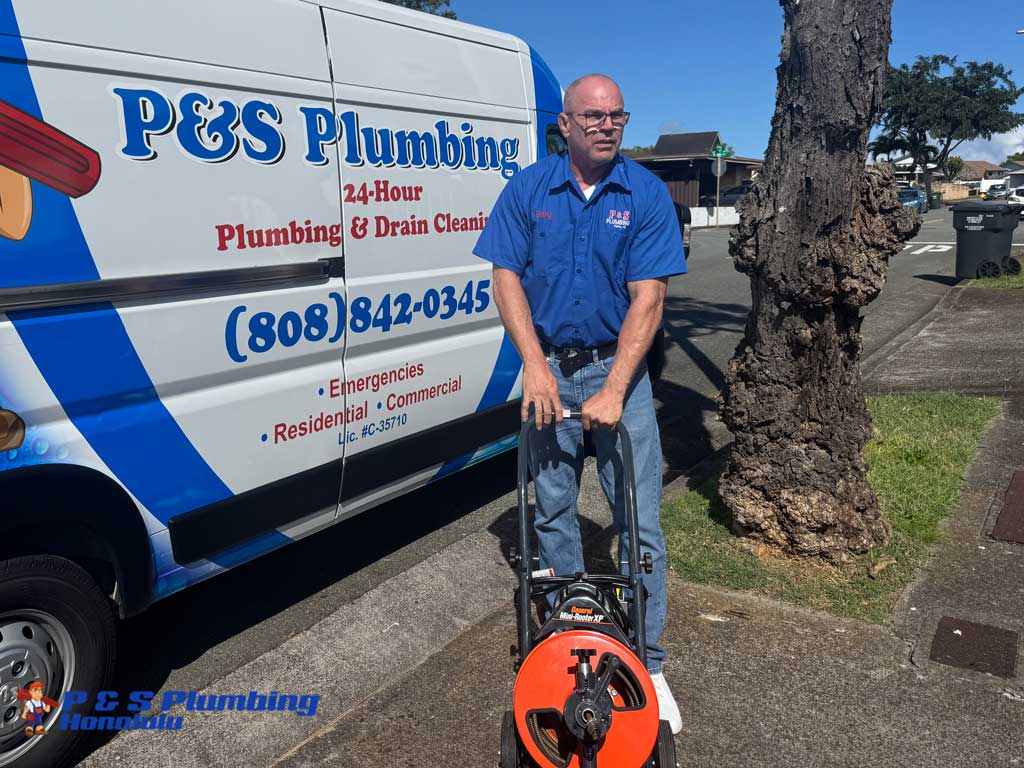
When the job is truly just cleaning, keep it proportionate. When it becomes plumbing work under Hawaii’s rules, bring in a licensed plumber and treat it with the seriousness it deserves.